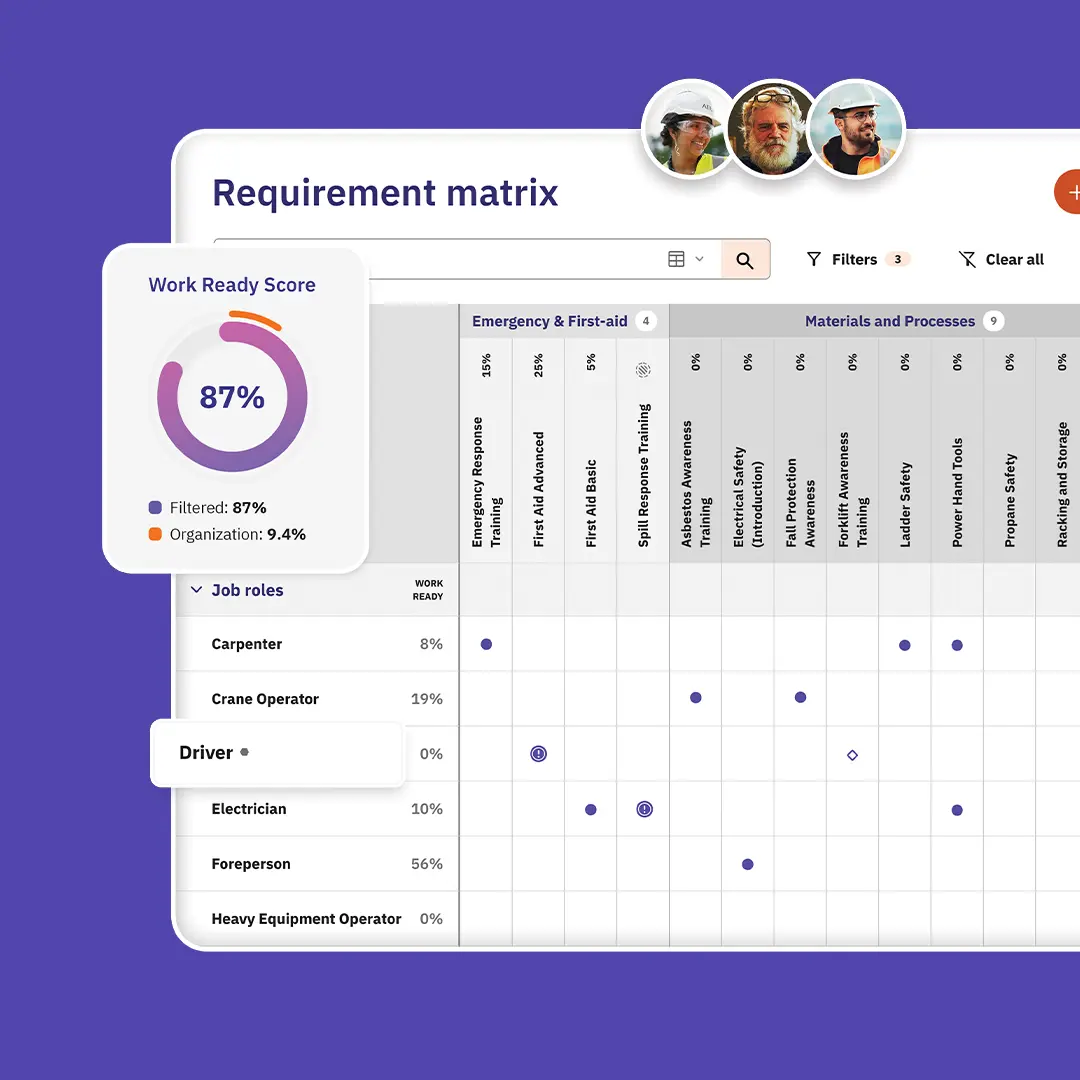
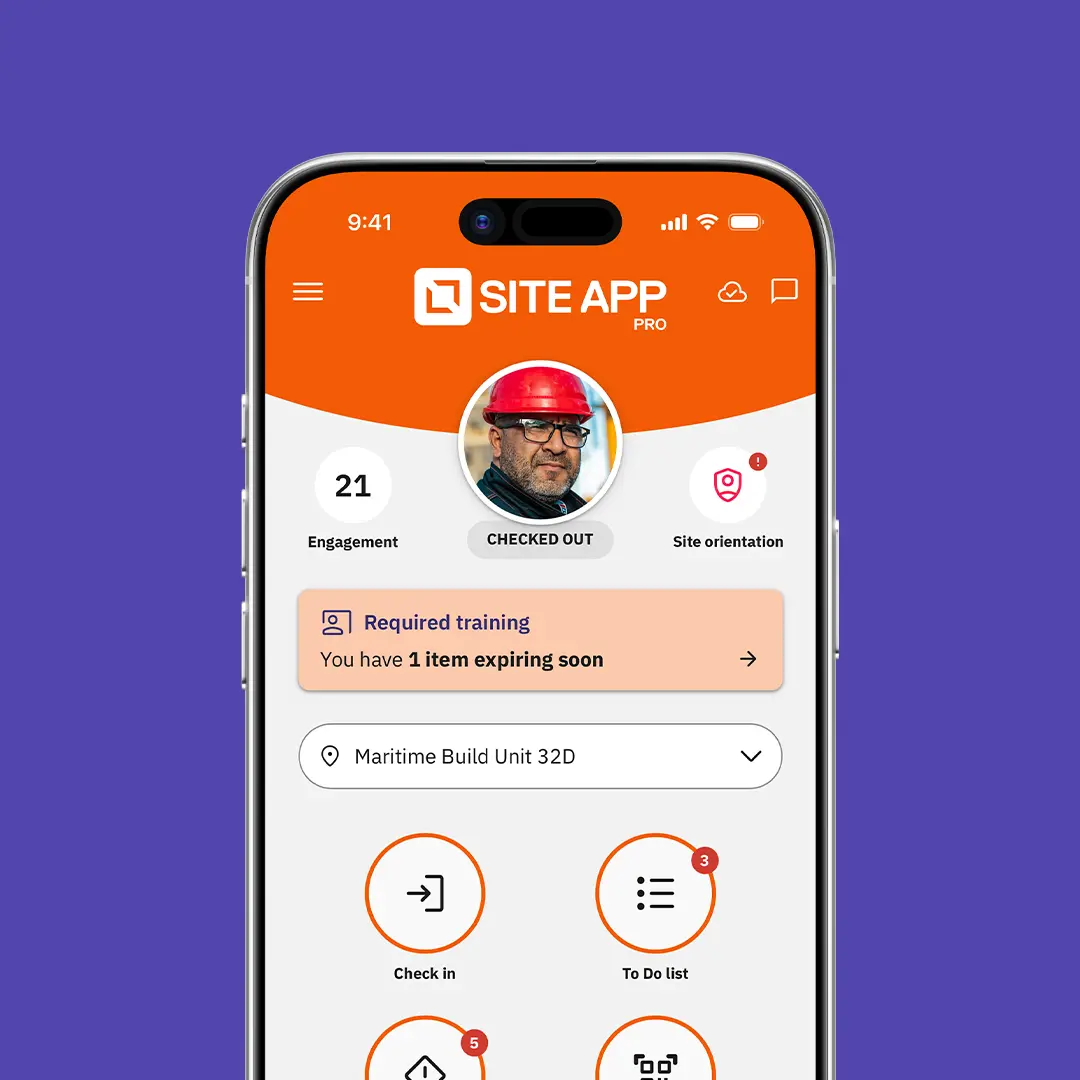
Group your safety forms into connected, end-to-end processes that guide your crew through the job safely. Instead of managing disconnected forms, you can link one form to the next.
Every team has different safety challenges. Explore solutions built for the way you work, from forms and site safety to incidents, training and equipment.
At Site App Pro, we believe in the power of people. That’s why our partners are at the heart of what we do, helping businesses streamline safety processes while growing their own success.
Health and safety policy template for NZ companies
A health and safety policy is a short statement of how your company will manage health and safety and who is responsible. WorkSafe calls health and safety documents good practice rather than a legal requirement, but most clients expect one. This template covers the sections a NZ policy usually includes.
A written health and safety policy isn't named as a requirement in WorkSafe's guidance, which describes having health and safety documents as good practice. The legal duties sit with the company itself: manage risks, engage workers and meet the duties in the Health and Safety at Work Act. A policy is a practical way to show how you'll do that.
Clients ask for one: main contractors, councils and prequalification schemes often want a signed policy in your tender or prequalification pack.
It sets direction: a policy tells your team what the company expects and who is responsible.
It anchors your system: procedures, forms and registers sit under the commitments the policy makes.
What should a health and safety policy include?
A good health and safety policy fits on one or two pages. It states the company's commitment, names who is responsible for what, and points to how risks are managed, how workers take part and how the policy is reviewed. The template below is a practical starting point, not wording set by law.
Health and safety policy template (sections)
Commitment: a short statement from the company's leadership about how it approaches health and safety, in plain words.
Scope: who the policy covers, such as workers, contractors, visitors and anyone affected by the work.
Responsibilities: what the directors or owners, managers and supervisors, workers and contractors are each expected to do.
Managing risks: how the company identifies hazards, assesses risks and puts controls in place, with critical risks first.
Worker engagement and participation: how workers raise concerns, suggest improvements and take part in decisions.
Incidents and near misses: how they're reported, investigated and learned from.
Training and competency: how the company makes sure people are trained and supervised for the work they do.
Contractors: how the company works with other companies on shared risks.
Review: when the policy will be reviewed, and the date it was last signed.
Sign-off: the name, role and signature of the most senior person, with the date.
Keep the template honest
Only promise what your company actually does. A policy that says every task has a risk assessment, when it doesn't, is worse than a shorter policy you can stand behind.
How do you write a policy people will read?
Writing a policy people read starts with knowing who it's for and what you need them to do. WorkSafe's guidance on writing health and safety documents asks five questions: what the document is for, who will read it, what the main messages are, whether it's effective, and how it will be shared and used.
Write for the team on the ground: short sentences, plain words and no legal jargon. If a new apprentice can't follow it, rewrite it.
Make it specific: name your real risks, such as working at height on a roofing job or chemicals in a workshop, rather than generic phrases.
Keep it short: put detail in procedures and forms, not in the policy.
Put it where people see it: in inductions, on the lunchroom wall and on workers' phones, not only in a binder at the office.
Example: a six-person engineering workshop
A small workshop's policy might commit to guarding every machine, running a pre-start check on the forklift each day, holding a toolbox talk every Monday, and reviewing the policy each April. Each commitment links to a form the team already uses.
How should workers be involved?
Workers should be involved because engaging them on health and safety is a legal duty. WorkSafe's fact sheet says companies must ask for and take into account workers' views on matters that affect their health and safety, and have clear, ongoing ways for workers to raise concerns and suggest improvements.
Practical ways to involve the team in the policy:
Share a draft: give workers the draft and time to read it.
Ask specific questions: what's missing, what's unrealistic and what would make it easier to follow?
Take their views into account: change the draft where they've made a good point.
Tell them the outcome: explain what changed and why, then brief the final version at a toolbox talk.
WorkSafe says the focus is on how effective engagement is, not on any particular system. A conversation at smoko that changes the policy counts more than a sign-off sheet nobody reads.
Who signs the policy, and when should you review it?
The policy is usually signed by the most senior person, such as the managing director or owner, to show it has leadership backing. Officers have their own due diligence duty, and signing the policy is one visible part of that. Set a review date and stick to it.
Review on a schedule: many companies review annually and record the date on the policy.
Review when things change: new work, new sites, a serious incident or a change in the law.
Review before 1 April 2027: the Health and Safety at Work Amendment Act 2026 brings in critical risks and small and large PCBUs, so update the policy's risk section to match.
How Site App Pro helps you put your policy into practice
Site App Pro is digital health and safety management software that helps you turn the commitments in your policy into everyday processes you can track and evidence.
Resource library: store the policy and procedures in one place and ask workers to read and acknowledge them.
Digital forms: run the inductions, pre-starts and toolbox talks your policy commits to, with reminders when they're due.
AI form builder: upload your existing templates, or start fresh with suggested questions drawn from the Health and Safety at Work Act 2015.
A health and safety consultant can review your draft policy, check it matches how your company actually works and update it for the 2027 changes. Find one who knows your industry in our health and safety consultant directory.
Try Site App Pro for free
Try Site App Pro free for 14 days, with no credit card required. We set you up and upload your existing forms for you, free of charge. Pricing is flat-rate and user-based rather than per project, and our NZ-based support team is here to help. Start your free trial.
Health and safety policy template for NZ companies
A health and safety policy is a short statement of how your company will manage health and safety and who is responsible. WorkSafe calls health and safety documents good practice rather than a legal requirement, but most clients expect one. This template covers the sections a NZ policy usually includes.
Ryan Hartley
CEO
Disclaimer: Site App Pro does not provide health and safety or compliance advice. This guide has been provided for information purposes only. You should consult your own professional health and safety advisors for advice directly relating to your company or before taking action in relation to any of the content provided.
WorkSafe's guidance describes health and safety documents as good practice rather than naming a written policy as a legal requirement. Your legal duties are to manage risks, engage workers and meet your other duties under the Health and Safety at Work Act. Many clients and prequalification schemes still ask for a signed policy, so most companies keep one.
One or two pages is enough for most companies. The policy states your commitment, who is responsible and how risks, incidents, training, contractors and worker engagement are handled. Detail belongs in procedures, forms and registers, which the policy points to. A short policy is more likely to be read and followed.
Yes, as a starting point. Replace the generic wording with your company's real risks, people and processes, involve your workers in the draft, and only commit to what you actually do. A generic policy that doesn't match how your company works won't help you show that you manage your risks.
Health and safety management software for small to enterprise New Zealand companies.