Health and safety on the job: toolbox talks and training

Health and safety on the job is the daily work of keeping people safe while the work happens: toolbox talks and pre-starts before the shift, training and supervision so people can do the task, and checks that plant and equipment are fit to use. New Zealand law expects all three.

What does health and safety on the job involve?

Health and safety on the job is everything that happens at the start of and during the work to manage its risks. It turns the plans in your hazard register into action: talking about today's risks, making sure the people doing the task are trained, and checking the equipment before it's used.

Day to day, it usually covers five things:

  • Toolbox talks: short team meetings, usually at the start of the day or shift, about the work and its risks.
  • Pre-starts: quick checks of vehicles, plant and equipment before use.
  • Training and supervision: making sure each person can do the task safely, and supervising those who are still learning.
  • Competency checks: confirming the person on the task holds the right tickets and experience.
  • Equipment and maintenance records: inspections, servicing and repairs, so you know what's safe to use.

This applies well beyond the building site. A packhouse running forklifts, an automotive workshop using hoists, a civil team operating excavators and a professional services firm with staff driving company vehicles all need the same basics, scaled to the work.

What does New Zealand law require?

The Health and Safety at Work Act 2015 (HSWA) requires a PCBU to manage risks so far as is reasonably practicable and to engage with workers. The General Risk and Workplace Management Regulations 2016 add a specific duty: workers must get suitable and adequate information, training, instruction and supervision.

Our guide to the Health and Safety at Work Act covers the wider duties. For on-the-job safety, the main legal points are:

  • Training and supervision: under regulation 9, a PCBU must ensure, so far as is reasonably practicable, that workers are adequately trained in the safe use of the plant, substances, equipment and personal protective equipment (PPE) they use. Training and supervision must be suitable and adequate for the nature of the work, the risks and the controls, and readily understandable.
  • Worker engagement: WorkSafe says PCBUs must ask for workers' views on health and safety and take them into account, and have clear, ongoing ways for workers to raise concerns day to day.
  • When to engage: WorkSafe lists times including when hazards are identified and assessed, when information and training are provided, and when changes are proposed that may affect health and safety.
  • Managing risks: risks from plant and equipment are managed like any other, using the hierarchy of controls. Our guide to risk and hazard management explains how.

What changes on 1 April 2027

From 1 April 2027, the Health and Safety at Work Amendment Act 2026 puts critical risks first. WorkSafe's list of critical hazards includes machinery and mobile plant, working at height over 3 metres, scaffolding, cranes and lifting equipment, and raised objects. Much of on-the-job safety deals with exactly these.

How do you run a toolbox talk that people listen to?

A toolbox talk is a short, informal safety meeting with the team, usually daily or at the start of a job, about the work ahead and its risks. A good one takes 5 to 15 minutes, covers one or two topics that matter today, and gives the team a real chance to speak.

‍

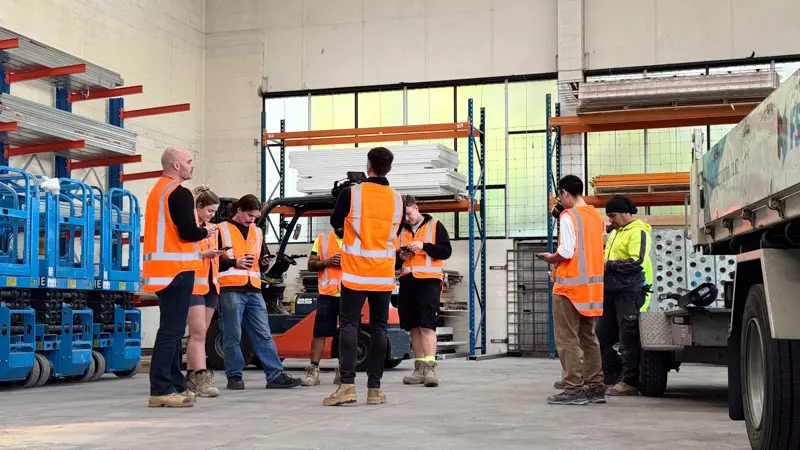
Warehouse crew in orange hi-vis gathered for a morning briefing, checking their phones beside a forklift

‍

Toolbox talks are one of the most practical ways to meet the duty to engage with workers. They work best when they're a conversation, not a lecture. Practical tips:

  1. Pick today's risk: link the topic to the work planned, such as a crane lift, a new chemical, wet weather or a change in traffic management.
  2. Keep it short: one or two points people will remember beats a list of twenty.
  3. Ask, don't tell: ask the team what could go wrong and what they'd do about it. They often see hazards that managers miss.
  4. Use real examples: a near miss from last week, a hazard on the board or a WorkSafe alert relevant to your work.
  5. Record it: note the date, topic, who attended and any issues raised, so you can act on them and show it happened.
  6. Close the loop: at the next talk, tell people what changed because of what they raised.

Health and safety managers often say they spend hours chasing paperwork after toolbox talks. Recording attendance on the spot, rather than on a paper sheet that sits in the ute, saves the double-handling.

Toolbox talk topic ideas

  • Today's critical risk, such as working at height or an excavation
  • A recent near miss or incident, and what changed
  • Weather and seasonal hazards, such as heat, UV, wind or ice
  • Plant and vehicle movements on site
  • Fatigue and long hours during busy periods
  • How to report a hazard or near miss

What are pre-start checks, and why do they matter?

A pre-start check is a quick inspection of a vehicle, item of plant or piece of equipment before it's used, to confirm it's safe to operate. Operators check things like brakes, lights, guards, hydraulics, tyres, seatbelts and warning devices, and record any faults so the item can be taken out of use and fixed.

Pre-starts are one of the simplest controls for critical risks involving machinery and mobile plant. To make them work:

  • Match the check to the item: a forklift, an excavator, a ute and a chainsaw need different questions.
  • Make faults stop the work: if a check fails, the item is tagged out and someone is told, not just noted on a form.
  • Do them every time: at the start of the shift or before first use, including when a different operator takes over.
  • Keep the record: a history of pre-starts shows maintenance trends and helps prove the check happened.
  • Act on faults quickly: a fault report should lead to a repair or corrective action with an owner and a due date.

For a vehicle fleet, the same idea applies to WoF and registration dates. A missed expiry is easier to prevent with a reminder than to explain after an incident.

How do you make sure workers are trained and competent?

Making sure workers are trained and competent means checking each person can do the task safely before they do it, and supervising them until they can. Regulation 9 requires suitable and adequate training and supervision. Training on its own isn't enough: competence comes from training plus experience, checked by someone who knows the job.

A practical approach:

  1. List the tasks that need training: start with critical risks, such as operating plant, working at height, confined spaces and hazardous substances.
  2. Set what "competent" means: the ticket, licence or unit standard needed, plus any site-specific induction.
  3. Check before the task: confirm the person is trained and their certificates are current before they're rostered on.
  4. Supervise new people: pair new or less experienced workers with someone competent until they're signed off.
  5. Track expiry dates: first aid certificates, licences, tickets and refresher training all lapse.
  6. Refresh after change: new equipment, a new process or a new site may need new training.

Health and safety managers describe the gap well: a supervisor sends someone out to run a tractor or mower who hasn't been trained or signed off as competent. A quick competency check against a current training record is the control that stops that happening.

Training that people actually understand

Regulation 9 says training must be readily understandable to the people receiving it. Keep training practical and on the job where possible, check understanding by watching people do the task, and think about language and literacy in a diverse team.

How do you manage plant and equipment safely?

Managing plant and equipment safely means knowing what you have, keeping it in safe condition, making sure only competent people use it, and checking it regularly. WorkSafe publishes guidance on the safe use of machinery, lockouts and machine guarding, and the same hierarchy of controls applies as for any other risk.

The basics for any company with plant or equipment:

  • An equipment register: what you own or hire, where it is, who can use it and the SOP that goes with it.
  • Guarding and isolation: moving parts guarded, and lockout procedures so machinery can't start while someone works on it.
  • Servicing and inspections: scheduled maintenance, plus pre-starts, with records of both.
  • Operator competence: only trained, authorised people use each item.
  • Faults and repairs: a clear way to tag out faulty equipment and track the repair.

Forklifts

WorkSafe's forklift training page points to the approved code of practice for training operators and instructors of powered industrial lift trucks. WorkSafe notes this guidance hasn't been updated for the HSWA but may still contain relevant information. Use it alongside daily pre-start checks and a clear traffic plan separating forklifts from pedestrians.

Electrical equipment and test and tag

WorkSafe says testing and tagging electrical appliances is not mandatory. What the law requires is that equipment is electrically safe and maintained in a safe condition. Testing and tagging is one useful way to check, and AS/NZS 3760 is an option to show you're testing appliances. How often depends on the equipment and the workplace: a lead used outdoors on a damp construction site needs more frequent testing than a computer in an office.
What records should you keep?

Records show what you did to manage on-the-job risks: who attended the toolbox talk, which pre-starts were done, who is trained for what, and when equipment was last serviced. The law doesn't set one format, but good records are how you show a client, an auditor or WorkSafe that your system works in practice.

Records worth keeping:

  • Toolbox talks: date, topic, attendees and issues raised.
  • Pre-starts and inspections: the item, the operator, the result and any faults.
  • Training and competency: courses, tickets, licences, sign-offs and expiry dates.
  • Equipment register and maintenance: servicing, repairs, test and tag results and SOPs.
  • Corrective actions: what was found, who's fixing it and when it was closed.

When these records connect, you can answer questions in minutes. If a client asks who on the job is ticketed for the excavator and when it was last checked, the answer shouldn't involve three filing cabinets and a phone call to the yard.

What are common mistakes?

The most common mistake is treating toolbox talks, pre-starts and training as boxes to tick rather than controls. A signed attendance sheet for a talk nobody listened to, or a pre-start ticked without looking at the machine, gives a false sense of control. Other common mistakes are below.

  • The same toolbox talk every week: topics that don't change with the work stop being heard.
  • Faults noted but not fixed: a pre-start that records a fault but doesn't stop the machine being used.
  • Expired tickets: certificates that lapsed months ago, discovered during an audit or after an incident.
  • No supervision for new starters: assuming a new worker knows the site's equipment because they've used similar gear elsewhere.
  • Paper that never comes back: forms left in vehicles or site boxes that never reach the office.

"She'll be right" is how a worn sling or an expired licence stays in use. A two-minute check is cheaper than finding out the hard way.

How Site App Pro helps with health and safety on the job

Site App Pro is digital health and safety management software that helps your team record, track and evidence the daily work of staying safe.

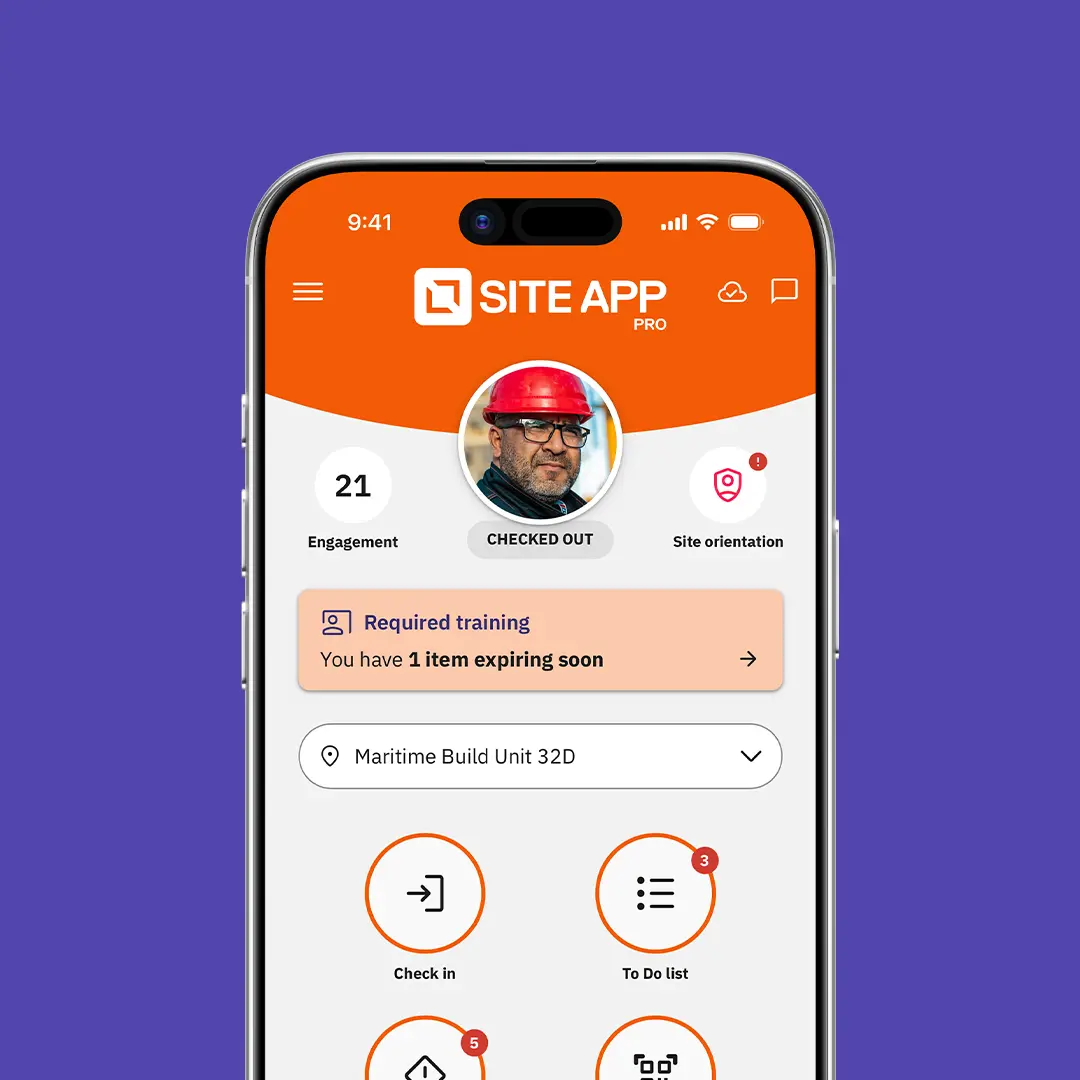
  • Scheduled forms: schedule toolbox talks, pre-starts and inspections so they appear on the right people's to-do lists, with reminders when they're due.
  • Equipment management: keep an equipment register with SOPs and service reminders, and connect pre-starts to each item.
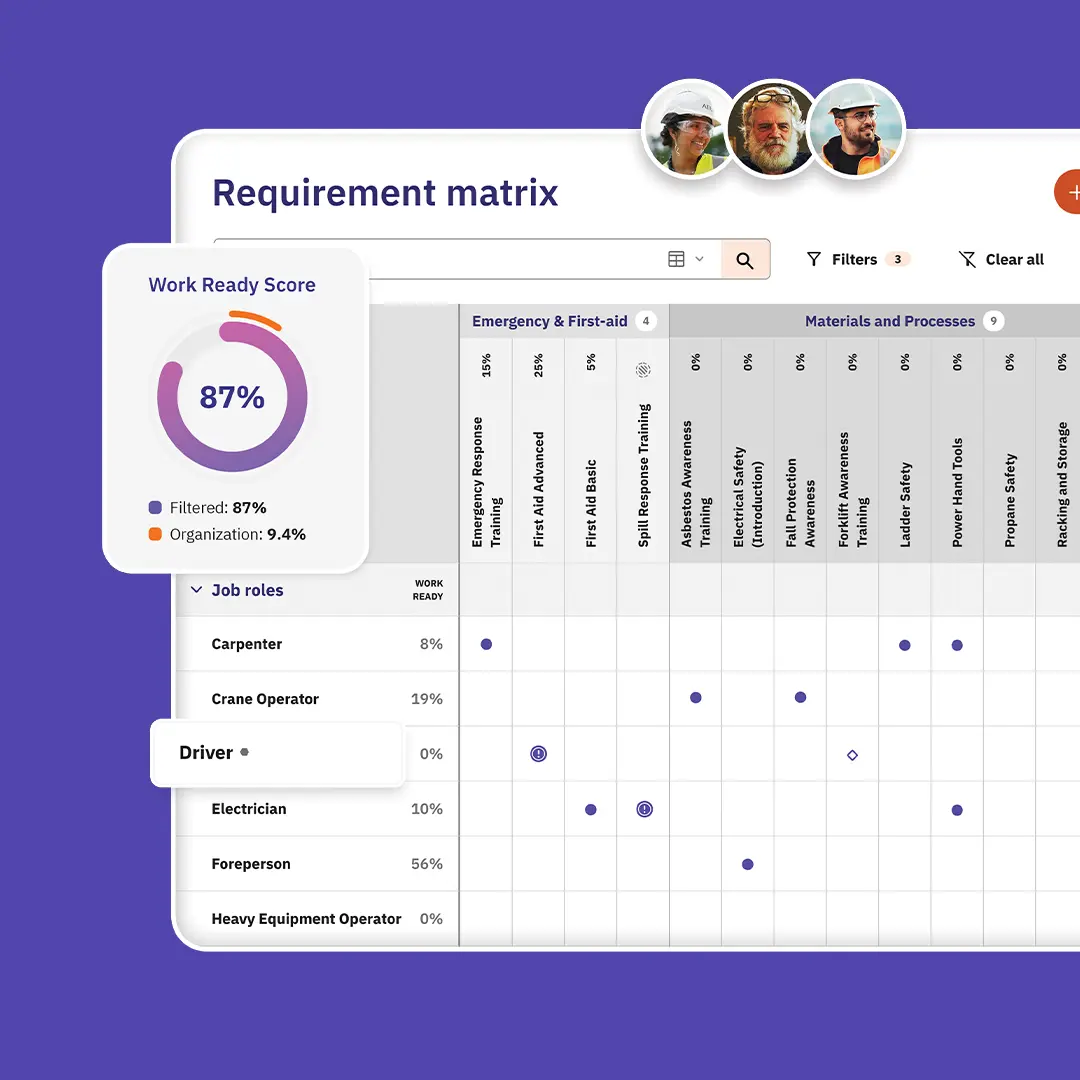
  • Training records: track training, tickets and certificate expiry dates so you know who's competent for what (the training module is a paid add-on).

See how training and competency works.

Find a health and safety consultant

A health and safety consultant can help you build a training matrix, review your pre-start checklists and plan toolbox talk topics around your critical risks before 1 April 2027. Find a health and safety consultant who knows your industry.

Try Site App Pro for free

Start a 14-day free trial with no credit card required. We set you up and upload your existing toolbox talk, pre-start and inspection forms for you, free of charge. Pricing is flat-rate and user-based rather than per project, and our NZ-based support team is here when you need help. Start your free trial.

Disclaimer: Site App Pro does not provide health and safety or compliance advice. This guide has been provided for information purposes only. You should consult your own professional health and safety advisors for advice directly relating to your company or before taking action in relation to any of the content provided.

Citations and references

Health and Safety at Work (General Risk and Workplace Management) Regulations 2016, regulation 9, New Zealand Legislation, https://www.legislation.govt.nz/regulation/public/2016/0013/latest/whole.html, reprint as at 1 December 2020, accessed 18 November 2026.

Worker engagement and participation fact sheet, WorkSafe New Zealand, https://registers.worksafe.govt.nz/managing-health-and-safety/businesses/worker-engagement-and-participation/worker-engagement-and-participation-fact-sheet, date not shown, accessed 18 November 2026.

What is a critical risk?, WorkSafe New Zealand, https://www.worksafe.govt.nz/laws-and-regulations/acts/changes/what-is-critical-risk/, updated 17 September 2026, accessed 18 November 2026.

Testing and tagging electrical appliances, WorkSafe New Zealand, https://www.worksafe.govt.nz/topic-and-industry/electricity/testing-and-tagging-electrical-appliances/, updated 16 October 2026, accessed 18 November 2026.

Forklift training, WorkSafe New Zealand, https://www.worksafe.govt.nz/topic-and-industry/vehicles-and-mobile-plant/forklifts/forklift-training, updated 7 September 2017, accessed 18 November 2026.

Machinery, WorkSafe New Zealand, https://www.worksafe.govt.nz/topic-and-industry/machinery/, date not shown, accessed 18 November 2026.

FAQS

A pre-start checklist should cover the safety-critical parts of the specific item, such as brakes, steering, lights, horn, seatbelt, guards, hydraulics, tyres and fluid leaks, plus the operator's name, date and result. It should also say what to do if a check fails, so faulty equipment is taken out of use.

‍

The PCBU is responsible for training workers. Under the General Risk and Workplace Management Regulations 2016, the PCBU must ensure, so far as is reasonably practicable, that workers get suitable and adequate information, training, instruction and supervision for the work, its risks and the controls in place.

‍

Test and tag is not a legal requirement in New Zealand. WorkSafe says what the law requires is that electrical equipment is safe and maintained in a safe condition. Testing and tagging to AS/NZS 3760 is one way to show you're checking appliances, and many clients and sites expect it.

‍

There is no set legal frequency for toolbox talks in New Zealand. Many companies hold them daily or at the start of each shift, and always before higher-risk work or when conditions change. What matters is that they give workers a regular, real opportunity to raise health and safety concerns and hear about today's risks.

‍

Site supervisor in a hard hat using a tablet above a busy construction site

Health and safety management software for small to enterprise New Zealand companies.

  • One online location
  • Customisable forms and dashboards
Book a demo