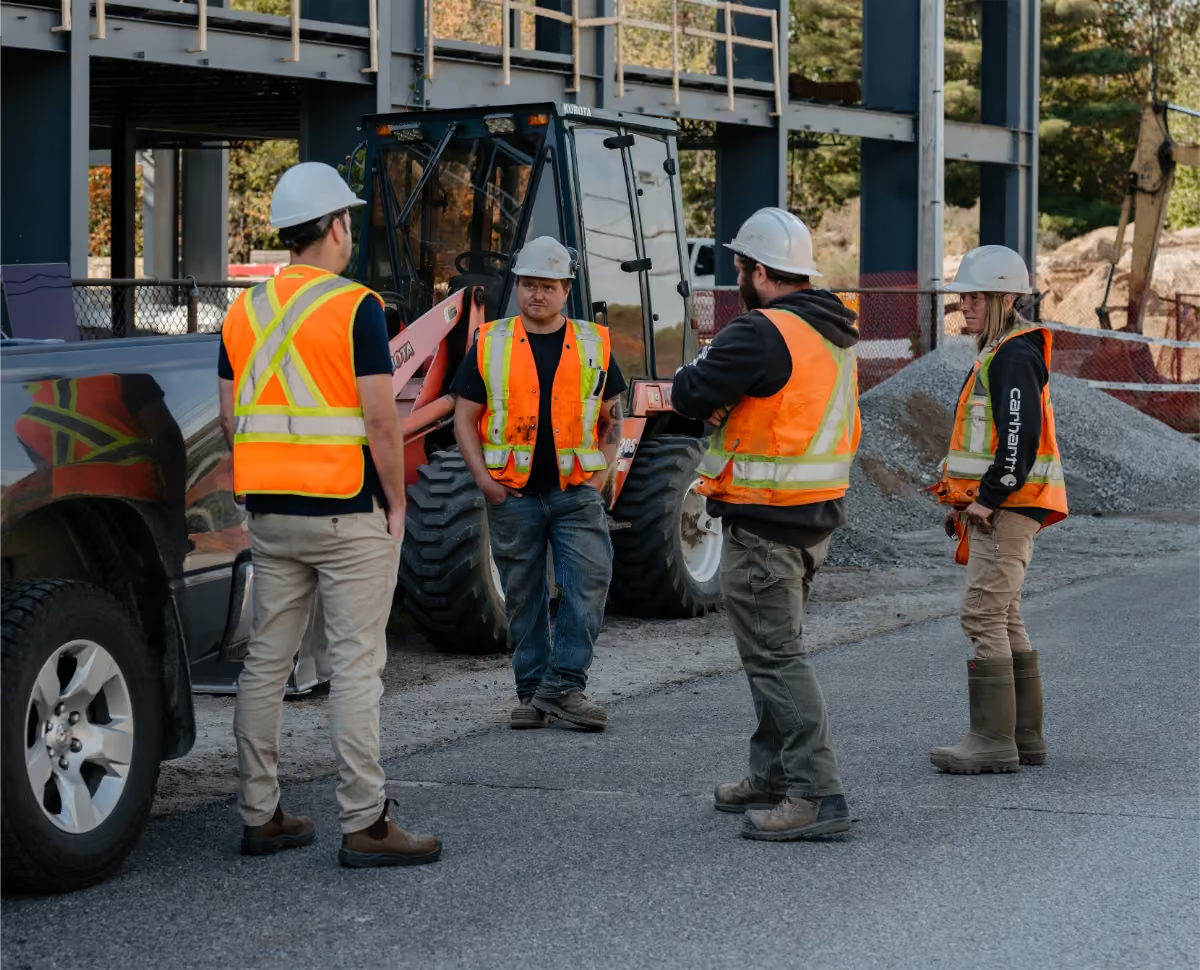

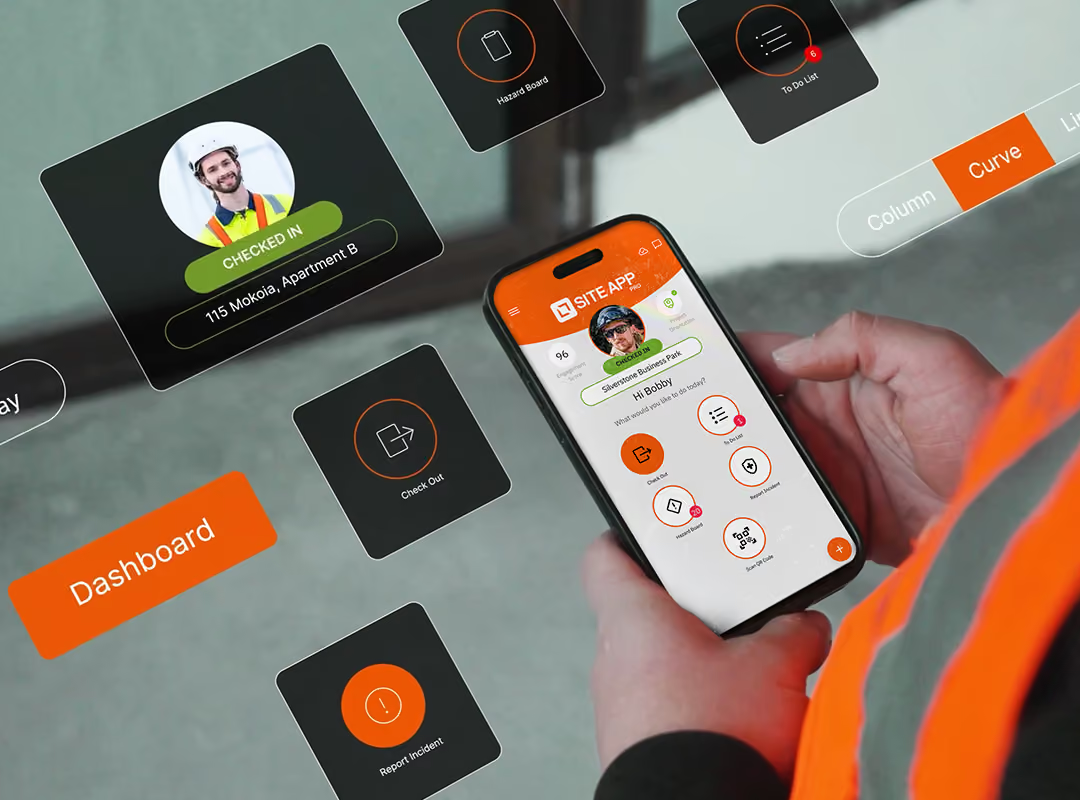
Group your safety forms into connected, end-to-end processes that guide your crew through the job safely. Instead of managing disconnected forms, you can link one form to the next.

At Site App Pro, we believe in the power of people. That’s why our partners are at the heart of what we do, helping businesses streamline safety processes while growing their own success.

We have an amazing support team dedicated to helping you and your business succeed with Site App Pro and answer any questions you may have.
Health and Safety Glossary
Plain-English definitions of OHSA, COR, WHMIS, WSIB and other health and safety terms used by Canadian construction and field teams.
COR (Certificate of Recognition)
A Certificate of Recognition, also known as COR is a nationally recognized Canadian construction safety certification and accreditation program. It verifies that a company’s occupational health and safety management system meets audited provincial standards. Earning COR demonstrates a proactive commitment to workplace safety, often serving as a mandatory prequalification requirement for bidding on major commercial and public construction projects across Canada, particularly in Alberta, BC and Ontario.
Corrective and preventive action
Also known as CAPA. Corrective and preventive action is a systematic process used to eliminate the root causes of identified hazards, incidents, or safety non-conformities. Corrective actions fix existing safety issues immediately, while preventive actions establish controls, updated procedures, or training to stop similar hazards or recurring incidents from happening anywhere on the job site.
Hazard register
A hazard register is a centralized, dynamic document or digital log used to identify, assess, and control workplace hazards. It tracks identified risks, records their severity levels, details assigned control measures, and assigns responsibility to designated personnel to ensure ongoing job site hazard mitigation and continuous safety monitoring.
Internal Responsibility System (IRS)
Also known as IRS. The internal responsibility system is a foundational philosophy of Canadian OHS legislation establishing that everyone on a job site, from executive leadership and supervisors to frontline workers, shares direct, personal responsibility for workplace health and safety, proportional to their role, authority, and ability to influence daily safety practices.
ISO 45001
ISO 45001 is the international standard for occupational health and safety management systems. It provides a structured framework for organizations to manage risks, prevent work-related injuries and illnesses, ensure legal compliance, and continuously improve safety performance, offering a globally recognized benchmark alongside regional accreditations like COR.
JHA / FLRA
Job Hazard Analysis (JHA) and Field Level Risk Assessment (FLRA) are hazard identification processes. A JHA breaks down specific job tasks before work begins to control risks, while an FLRA is a quick, real-time assessment completed by workers directly at the work face before starting daily tasks.
JHSC (Joint Health and Safety Committee)
A joint health and safety committee is a legally mandated workplace committee composed of worker and management representatives working together to improve health and safety. The JHSC regularly inspects job sites, identifies hazards, reviews incident reports, holds routine safety meetings, and makes formal recommendations to employers to resolve workplace safety concerns.
Near miss
A near miss is an unplanned event or incident that did not cause injury, illness, or equipment damage, but had the clear potential to do so under slightly different circumstances. Reporting and investigating near misses allows safety managers to fix hidden hazards before an actual injury or costly incident occurs.
Occupational Health and Safety Act (OHSA)
The Occupational Health and Safety Act is Canada’s primary provincial legislation that sets legal health and safety standards, rights, and duties for workplaces within Canadian jurisdictions. It establishes mandatory employer responsibilities, enforces safety compliance, empowers inspectors, and guarantees workers the right to know, participate, and refuse dangerous work. It's built around the Internal Responsibility System, the principle that everyone on site, not just management, shares responsibility for finding and fixing hazards.
PPE (Personal Protective Equipment)
PPE is specialized gear, clothing, or equipment worn by workers to minimize exposure to specific job site hazards. Common construction Personal Protective Equipment includes hard hats, high-visibility vests, safety boots, eye protection, respirator masks, and fall protection harnesses designed to prevent injuries when engineering controls cannot eliminate the risk.
SE-COR (Small Employer Certificate of Recognition)
A specialized safety accreditation tailored specifically for smaller Canadian businesses (typically 10 or fewer employees). It evaluates and certifies that a company’s health and safety program meets audited provincial standards, giving small contractors access to major bidding opportunities without the heavy administrative time of standard COR.
SDS / MSDS / WHMIS
WHMIS (Workplace Hazardous Materials Information System) is Canada’s hazard communication standard. It relies on Safety Data Sheets (SDS) - formerly Material Safety Data Sheets (MSDS) - to provide detailed safety information, handling procedures, storage guidelines, and emergency first-aid protocols for hazardous products and chemicals used on site.
Site orientation
A mandatory safety briefing provided to workers, sub-trades, and visitors before they access a jobsite for the first time. It introduces site-specific hazards, emergency evacuation protocols, designated first-aid responders, mandatory PPE requirements, and unique project rules to ensure safe entry and compliance.
Toolbox talk / Tailgate meeting
A short, informal 5 to 10 minute safety meeting held directly at the job site before a shift begins. Led by supervisors or foremen, these briefings focus on specific daily hazards, upcoming high-risk tasks, safe work procedures, and key safety reminders to keep safety top of mind for crews.
WCB (Workers' Compensation Board)
Provincial statutory bodies (such as WCB Alberta or WorkSafeBC) that administer no-fault workplace injury insurance for employers and workers. They handle compensation claims, medical coverage, and rehabilitation for injured workers, while funding and enforcing Canadian provincial workplace health, safety, and prevention standards.
WSIB (Workplace Safety and Insurance Board)
Ontario’s specific provincial agency responsible for administering the province’s workplace safety insurance system. The WSIB provides disability benefits, medical coverage, and loss-of-earnings support to injured workers, while offering programs and financial incentives to help Ontario businesses build safer, fully compliant workplaces.